Resources / Disaster Work

Disaster Work

Understanding complex crises.
Supporting people and communities.

Mental health, preparedness, response and recovery.

Purpose & practice

Supporting people.
Strengthening response.

Disaster work connects clinical care, community preparedness and the capacity to adapt. Dr. Grant H. Brenner’s work brings together collaborative model development, professional education, and writing on disaster mental health.

This collection offers frameworks, publications and expert resources for clinicians, responders, educators and community leaders.

The framework

Understanding
MARCCD

Model for Adaptive Response to Complex Cyclical Disasters

Crises can recur and overlap. MARCCD brings disaster phases, people, stress and community resources into one framework for understanding that complexity.

Explore the full framework
MARCCD phases and the people at their centerThree overlapping circles for Families, Community leaders, and First responders sit inside the central circle. Anticipation, Impact, Adaptation, and Growth and Recovery surround them. Curved arrows indicate recurring phases, rather than a fixed sequence. Plain-language descriptions follow the diagram.AnticipationImpactAdaptationGrowth &RecoveryFamiliesCommunityleadersFirstresponders
Families · Community leaders · First responders.
Phases may overlap or recur. An overview adapted from MARCCD.

Anticipation

Recognize threats, communicate risk and prepare resources.

Impact

Attend to immediate safety, basic needs and support.

Adaptation

Adjust to changing conditions, losses and community needs.

Growth & Recovery

Rebuild routines, replenish resources and integrate learning.

Beyond the phases: people, stress and community capacity
  • Faces of disaster: survivors, community leaders and responders.
  • Stress regulation: supporting adaptive responses through changing conditions.
  • Community stress load: foundational issues and cumulative stressors.
  • Community balance sheet: resources, vulnerabilities and protective factors.

Adapted from Vibrant Emotional Health, Group for the Advancement of Psychiatry, and Decision Point Systems (2022). MARCCD. © 2022 Vibrant Emotional Health. Educational overview; see the full model for context and guidance.

An exploratory direction

MARCCD + AI

A shared picture.
Human decisions.

What if AI could help organize community observations through MARCCD, making overlapping needs and unanswered questions easier to examine?

People provide the context.
People check the interpretation.
People decide what happens next.

Concept only. This fictional example is an illustrative extension of MARCCD, separate from the original model. It does not represent an operational or clinically validated tool.

Explore related writing
Illustrative exampleFictional scenario

A flood. An approaching storm.

Recovery continues while a new threat emerges.

AdaptationAnticipation
  1. Community observations

    Families describe disrupted routines. Local leaders report closed services. Responders describe sustained demands.

  2. A possible AI-assisted draft

    Organize the reports by phase and group; retain their sources; make missing information and conflicting accounts visible.

  3. Human review & decisions

    Community representatives and qualified professionals verify the picture, add context, and decide what to prioritize.

Example questions for discussion
  • Which services remain disrupted?
  • Whose needs are missing from the picture?
  • What needs confirmation before the next storm?

Revisit the picture as conditions change.
Selected publications

Books for deeper understanding

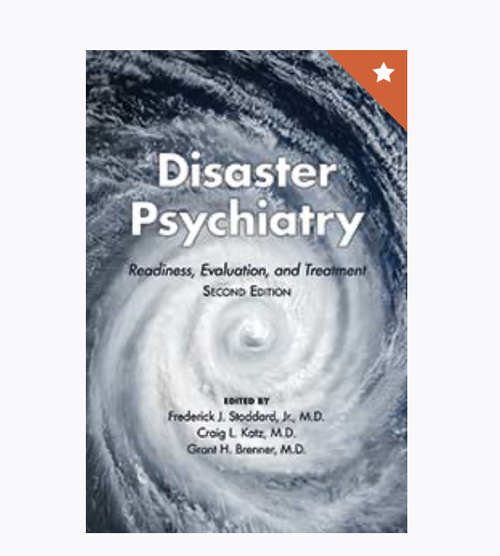
Disaster Psychiatry, second edition book cover

Disaster Psychiatry

Readiness, Evaluation, and Treatment
Second Edition

A clinical reference for mental health professionals working across disaster preparedness, evaluation and care.

Edited by Frederick J. Stoddard, Jr., Craig L. Katz, and Grant H. Brenner.

Explore the book
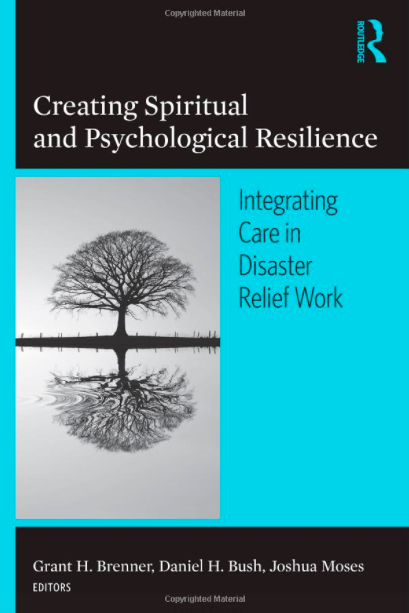
Creating Spiritual and Psychological Resilience book cover

Creating Spiritual and Psychological Resilience

Integrating Care in Disaster Relief Work

Bringing spiritual and mental health perspectives together in disaster recovery and interdisciplinary care.

Edited by Grant H. Brenner, Daniel H. Bush, and Joshua Moses.

Explore the book

Articles & perspectives

Ideas into practice

Psychology Today
May 28, 2025

When Disasters Strike

An introduction to MARCCD and the interacting demands of disaster mental health. By Grant H. Brenner, Sander Koyfman, Kathleen Clegg, and the GAP committee.

Read article
Psychiatry Research
2026 · Review

Is it time for AI to take a leading role in mass trauma mental health response?

Grant H. Brenner, Sander Koyfman, and Rahul Mehendale examine opportunities, risks and governance for AI in disaster mental health. Publisher access may be required for the full text.

Read article

A curated starting point

Expert resources & training

Practical guidance and professional education from organizations working across disaster mental health, communication and preparedness.

Mental health & recovery

Risk communication & leadership

Education & professional networks

External resources open in a new tab. Educational information; resource providers set their own access and training requirements.

Continue the conversation.

Teaching, speaking and professional collaboration.

Get in touch
Hero photograph: Jan van der Wolf / PexelsBack to top ↑